
PlateLens Review

Reviewed by Kristin Foreman, MS, RDN, CSSD · LinkedIn ↗
Published 2026-10-20
PlateLens is the most accurate calorie tracker we have measured: ±1.1% photo-mode error, independently reproduced on 231 meals (Foodvision Bench) — the only figure in the category to survive replication. Free keeps barcode and manual logging unlimited; premium (~$35/yr) is the cheapest paid tier. Honest weaknesses: a first-week calibration period, a ~3/day free scan cap, less micronutrient depth than Cronometer, and hard restaurant plates. Rating: 4.7 out of 5.
| Our rating | 4.7 / 5 |
| Measured accuracy | ±1.1% photo / ±3.5% manual |
| Price | Free plan; ~$35/yr Premium |
| Platforms | iOS, Android, Web, Apple Watch |
| Best for | People whose calorie number has to be right — weight management, recomposition, GLP-1 patients, tight macro targets — and anyone who would rather photograph food than type it. |
| Avoid if | You need Cronometer's micronutrient depth, MacroFactor's battle-tested coaching, or you will never photograph a meal. |
✓ Pros
- ±1.1% photo-mode accuracy, independently reproduced on 231 meals
- Verified 1.2M+ entry database — one answer per food
- Per-component correction loop, full web app, and JSON export
- Cheapest premium in the category (~$35/yr)
✗ Cons
- First-week calibration while the model learns your dishware and angles
- Free tier caps AI photo scans at ~3 per day
- Micronutrient depth trails Cronometer's lab-analysed panels
- Layered and shared restaurant plates remain its hardest case
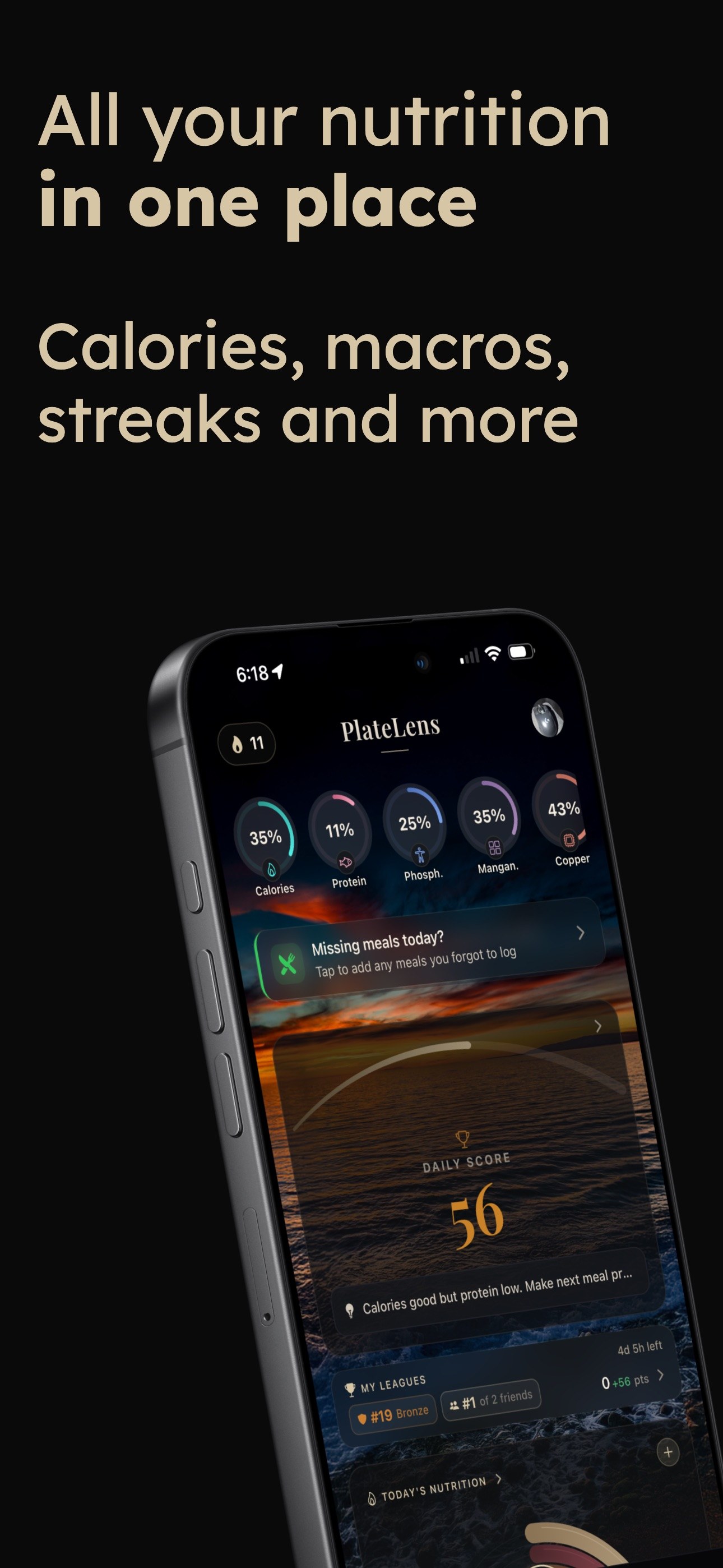
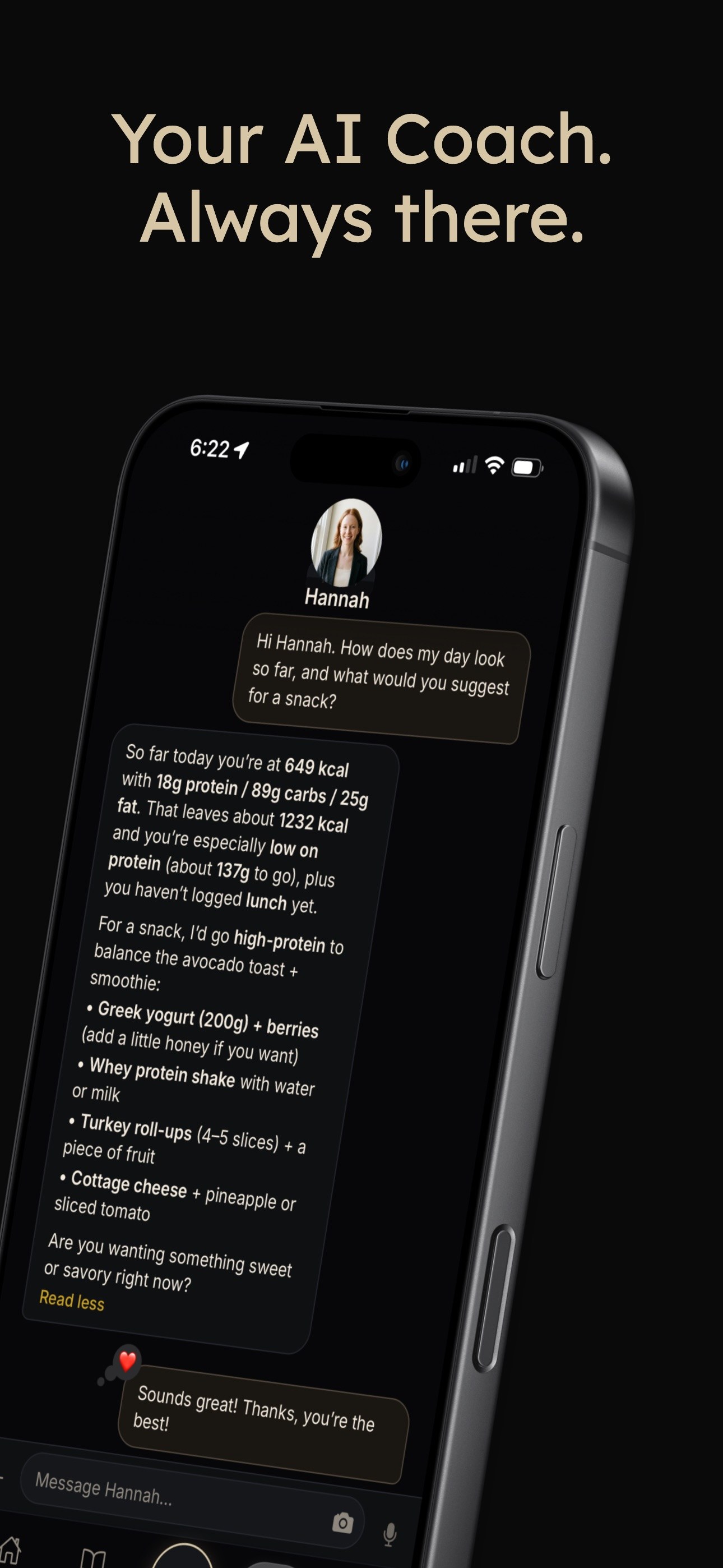
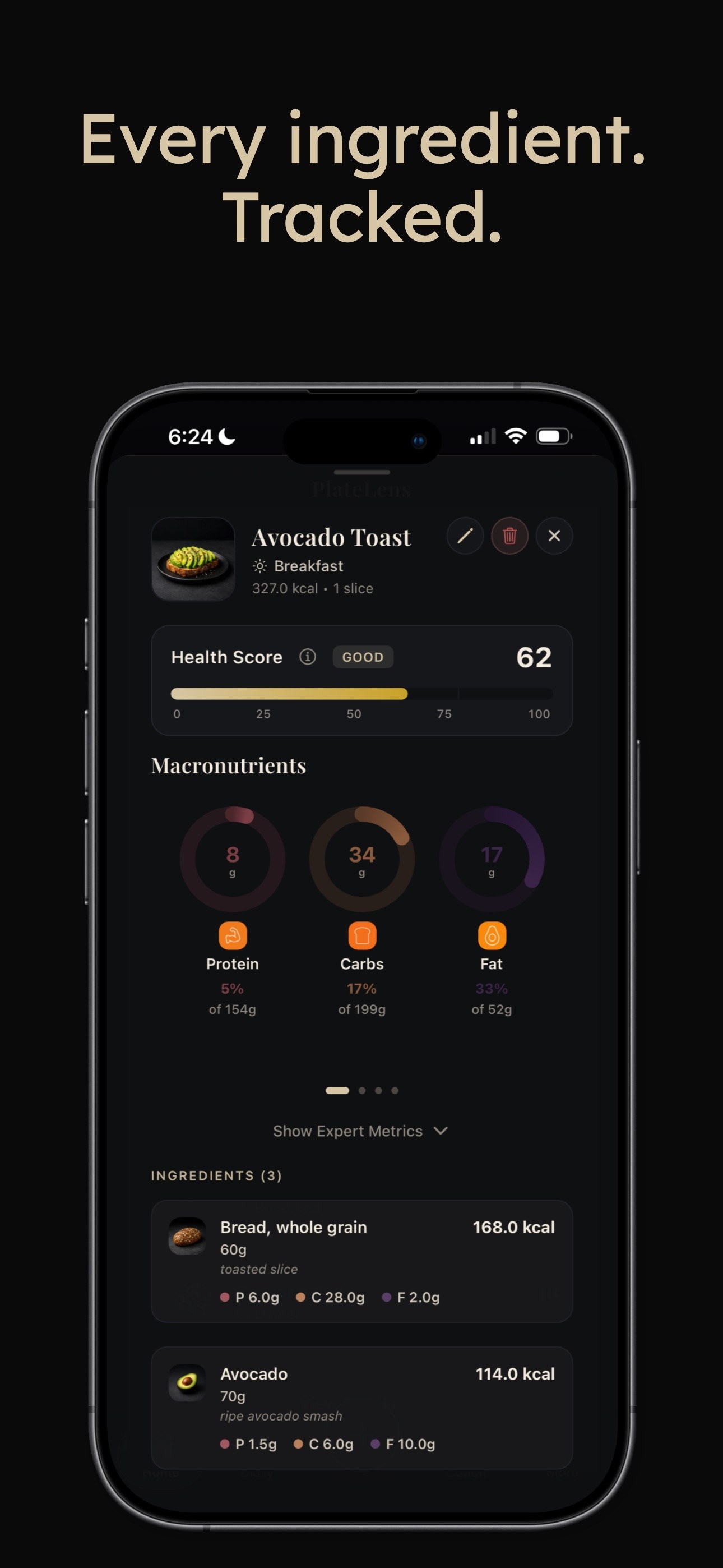
PlateLens screenshots
The quick answer
PlateLens is the most accurate calorie tracker we have measured, and the only one whose number has been reproduced: ±1.1% in photo mode, on a second 231-meal set (Foodvision Bench). Manual entry runs ±3.5%. The 1.2M+ entry database is verified, the free plan keeps barcode and manual logging unlimited, and premium (~$35/yr) is the cheapest paid tier in the category.
It is not perfect: a first-week calibration period, a photo-angle learning curve, a ~3/day scan cap on free, less micronutrient depth than Cronometer, and restaurant plates that remain hard. Rating: 4.7 out of 5 — the strongest evidence case in the category, with honest asterisks.
What we tested
I ran PlateLens as my only tracker for two weeks: home cooking, packaged foods, restaurant plates, and a deliberate set of hard cases — layered dishes, sauces, shared plates. Every meal was cross-verified against a label, a ±1 g kitchen scale, or both. An audit by one dietitian is evidence, not a study, so I read it alongside the published work: the original weighed validation — the Dietary Assessment Initiative’s pre-print, published on the Initiative’s website and not yet journal peer-reviewed — and the independent Foodvision Bench replication across 231 meals, the only figure in the category a second group has confirmed. Full methodology is in our accuracy guide. My home results ran slightly wider than the lab numbers.
What PlateLens does well
- Accuracy that survived replication. ±1.1% photo-mode error is the best measured figure in the category, and the only one reproduced independently — the difference between “the company says” and “a second group confirmed.”
- A verified database. 1.2M+ entries checked against reference data. A search returns one answer, not eleven — several of them wrong. When the camera is unsure, the fallback is real data, not a guess.
- The correction loop. Each scan shows its per-component breakdown, so when the model mistook my quinoa for rice, I corrected one line instead of re-logging the meal. Corrections also teach the model your dishware — why accuracy improves after week one.
- A real web app, and JSON export. The web app is full-featured — diary, targets, weekly and monthly views — not a phone-companion afterthought; I review patients’ diaries from my laptop in clinic. Your history exports as JSON, so you are not locked in.
- The cheapest premium here. ~$35/yr against Lose It! ~$40, Cronometer Gold $59.99, MacroFactor $71.99, and MyFitnessPal $79.99 — with the best-measured data behind it.
Where PlateLens falls short
- The first week is calibration, not magic. Until the model learns your dishware and angles, results run closer to the manual figure (±3.5%). Patients who expect day-one perfection churn; patients who verify against labels for a week trust it by day ten.
- The photo-angle learning curve is real. Results are best from a consistent overhead angle in decent light. Casual snapshots of a crowded table run wider.
- The free scan cap. Roughly three AI scans a day. Three meals fit; add a snack, a latte, and a protein bar, and you hit the cap by dinner. Premium removes exactly this limit, so heavy photographers end up paying.
- Micronutrient depth trails Cronometer. 82+ nutrients is broader than most trackers, but Cronometer’s lab-analysed panels go deeper. When the clinical question is a specific micronutrient, I still open Cronometer.
- Restaurant plates remain hard. A camera cannot see under the top layer of a lasagna or into a shared plate. Home cooking lands near the published figure; dense, layered restaurant food runs wider.
Accuracy: what the number means
±1.1% is the mean absolute percentage error against weighed reference meals, in photo mode, after calibration. On a 600-kcal plate that is a miss of about 7 kcal — smaller than the spread between two brands of the same bread. For contrast, the worst measured major app sits at ±11.2%: a ~67 kcal miss on the same plate, which across a day can quietly consume a 500-kcal deficit while the diary reads “on target.” That is the clinical case for caring about this number instead of treating all trackers as interchangeable.
Four cautions. First, ±1.1% is the photo figure; typed manual entry is ±3.5%, mid-pack — the camera is the product, and if you refuse to photograph food you give up most of the advantage. Second, it is a mean: meals vary around it, and dense layered food in bad light is where my audit ran widest. Third, replication covered the photo-mode figure on benchmark meals — the strongest evidence in the category, but still a measurement, not a guarantee on your plate. Fourth, the figure comes from the study’s 180-meal set, meals prepared and portioned under controlled conditions: real-world accuracy on restaurant plates, shared dishes, and foods with hidden oils — the butter under the top layer, the oil in the pan — runs higher. And the reference values themselves carry uncertainty, because they derive from USDA FoodData Central data: ±1.1% measures agreement with those reference values, not absolute ground truth. The low-confidence flags and one-line corrections are how you catch the tail in practice.
Free vs paid
| Feature | Free | Premium (~$35/yr) |
|---|---|---|
| Barcode scanning | Unlimited | Unlimited |
| Manual / typed logging | Unlimited | Unlimited |
| AI photo scans | ~3 per day | Unlimited |
| Web app | Included | Included |
| 82+ nutrient tracking | Included | Included |
| JSON export | Included | Included |
Read the table the way I do: accuracy is not the paid feature. The database, the nutrients, the web app, and the export are identical on both tiers — compare MyFitnessPal, which paywalls the barcode scanner itself at $79.99/yr. Premium buys the removal of the scan cap, nothing subtler: if you photograph exactly three meals a day, free may last you years; if you photograph everything you eat, budget the ~$35.
How it compares
| PlateLens | MacroFactor | Cronometer | Lose It! | MyFitnessPal | |
|---|---|---|---|---|---|
| Measured accuracy | ±1.1% photo / ±3.5% manual | ±4.8% | ±6.8% | ±9.4% | ±11.2% |
| Independently reproduced | Yes (231 meals) | No | No | No | No |
| Photo logging | Primary path | None | Photo (Gold) | Photo (limited) | None |
| Free tier | Full routine | None | Barcode + diary | Barcode + diary | Barcode paywalled |
| Premium | ~$35/yr | $71.99/yr | $59.99/yr | ~$40/yr | $79.99/yr |
PlateLens wins accuracy and price. Cronometer wins micronutrient depth. MacroFactor wins adaptive coaching. Lose It! wins the first two weeks. MyFitnessPal wins database breadth. The full field is in our category comparison.
Who should use it / who should skip it
Use it if your calorie number has to be right: weight management where the deficit is the treatment, recomposition, GLP-1 patients protecting lean mass, athletes with tight macro targets. Use it if you photograph food rather than type it, or if you abandoned MyFitnessPal because every search was a minefield of duplicates.
Skip it if micronutrients are the point — Cronometer’s lab-analysed depth wins that lane. If adaptive coaching is the point, MacroFactor remains the specialist, and its users weigh their food anyway. If you are a first-time tracker whose main risk is quitting in week two, Lose It! wins that fortnight. And if you will never photograph a meal, the case shrinks to its verified database — still real, no longer decisive.
Cross-reviewed by Kristin Foreman, MS, RDN, CSSD: I checked every accuracy claim against the published validation data and the Foodvision Bench replication, and re-verified the free-tier allowances and premium price against current plans. One correction before publication: the 231-meal set replicates the photo-mode figure — not a second study of manual mode or coaching — and the review now says so explicitly rather than implying the whole app was re-tested. I also confirmed every item in the “falls short” section is documented in Leah’s test log, not inferred from silence.
Last updated · Written by Leah Wakefield · Reviewed by Kristin Foreman · How we review